
Search
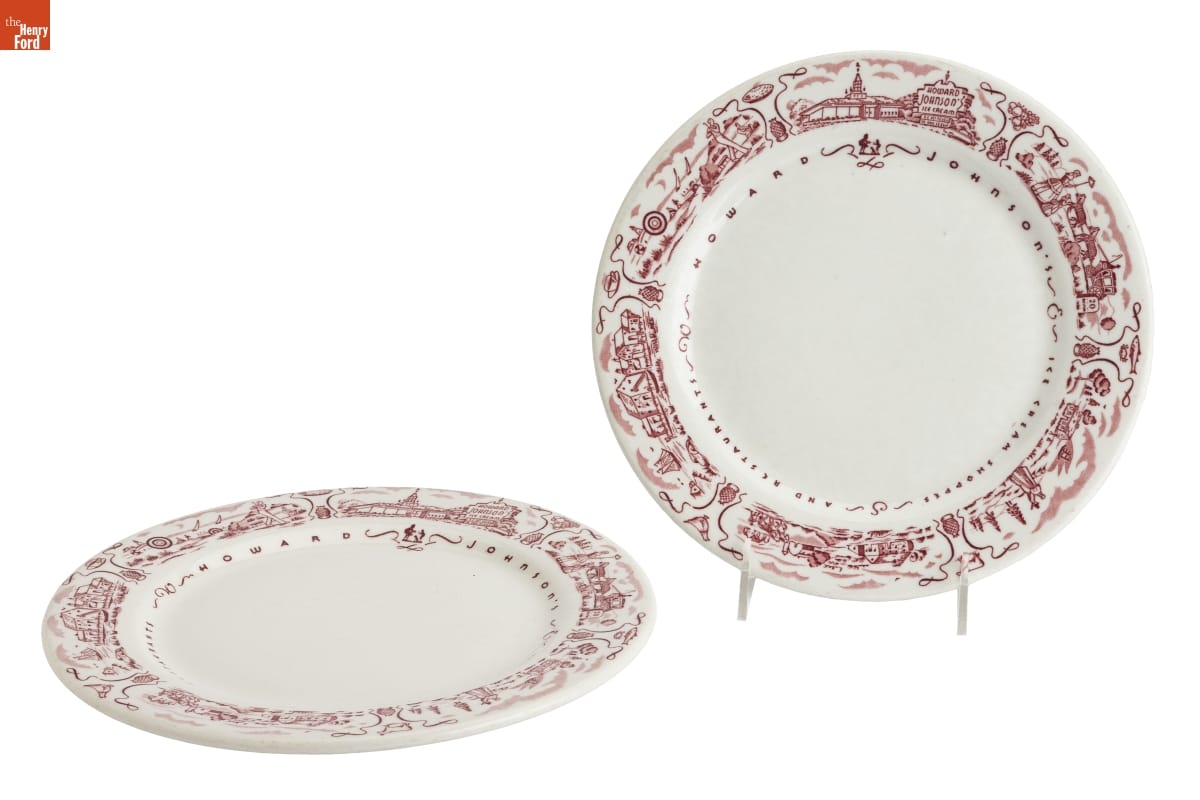
- Howard Johnson's Plates, 1951-1954 - In the 1920s, Howard Deering Johnson began selling ice cream from food stands around Boston, Massachusetts. Johnson later expanded his business to full-service restaurants. He franchised these orange-roofed establishments across America, locating them along highways to cater to the traveling public. This plate celebrates America's growth with idyllic scenes on the rim, including one of a Howard Johnson's restaurant.
- 1951-1954
- Collections - Artifact
Howard Johnson's Plates, 1951-1954
In the 1920s, Howard Deering Johnson began selling ice cream from food stands around Boston, Massachusetts. Johnson later expanded his business to full-service restaurants. He franchised these orange-roofed establishments across America, locating them along highways to cater to the traveling public. This plate celebrates America's growth with idyllic scenes on the rim, including one of a Howard Johnson's restaurant.
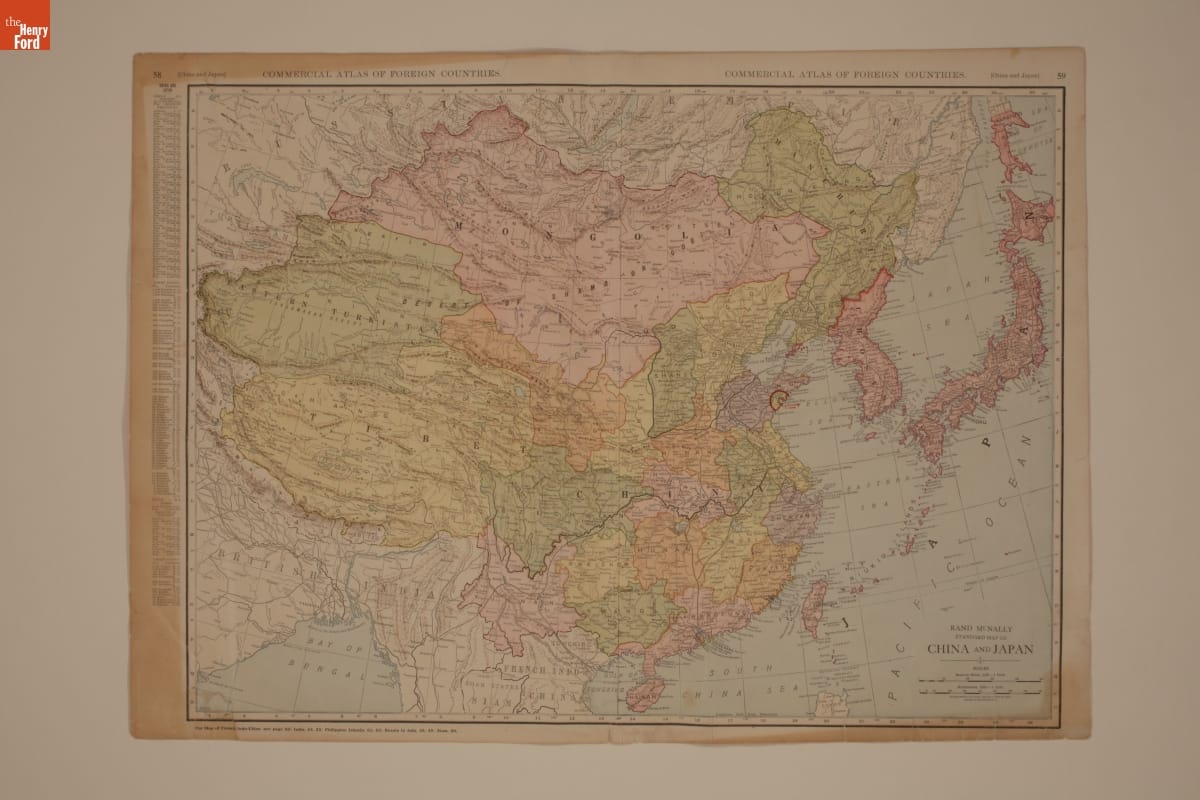
- "Rand McNally Standard Map of China and Japan," 1930-1932 - Ford Motor Company operated sales and service branches in cities around the world. The company considered building an assembly plant in Shanghai, China. This map was collected during the study. Ford decided against the idea when it learned that Chinese law required the property to be owned by a citizen of China.
- 1930-1932
- Collections - Artifact
"Rand McNally Standard Map of China and Japan," 1930-1932
Ford Motor Company operated sales and service branches in cities around the world. The company considered building an assembly plant in Shanghai, China. This map was collected during the study. Ford decided against the idea when it learned that Chinese law required the property to be owned by a citizen of China.
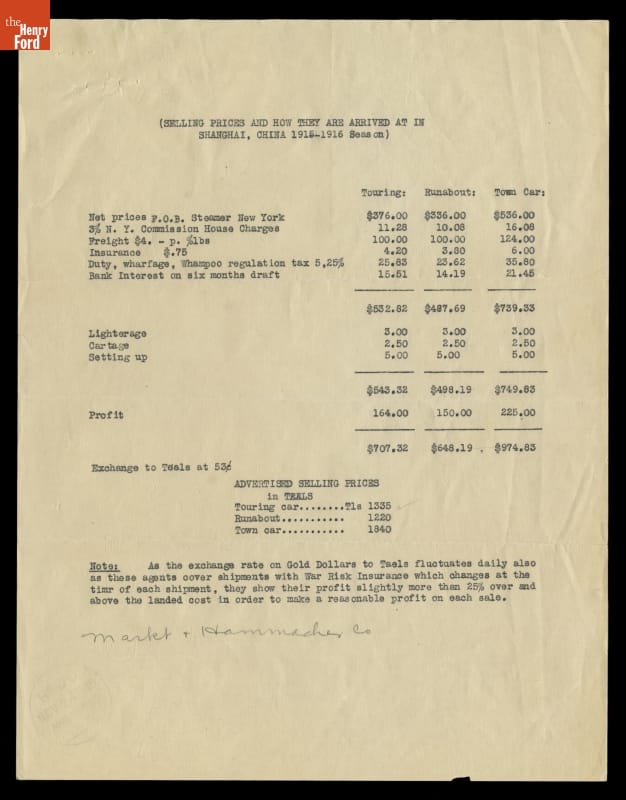
- Selling Prices for Ford Model T Cars and How They Are Arrived at in Shanghai, China, 1915-1916 Season - Though it operated some direct-sales offices in major cities, Ford Motor Company sold most of its Model T cars through franchise agreements with independent dealers. Each franchisee received the right to sell Ford cars within a specific territory. Ford encouraged dealers by offering discounts and rebates to high sellers. But low-selling dealers risked losing their territories.
- 1915-1916
- Collections - Artifact
Selling Prices for Ford Model T Cars and How They Are Arrived at in Shanghai, China, 1915-1916 Season
Though it operated some direct-sales offices in major cities, Ford Motor Company sold most of its Model T cars through franchise agreements with independent dealers. Each franchisee received the right to sell Ford cars within a specific territory. Ford encouraged dealers by offering discounts and rebates to high sellers. But low-selling dealers risked losing their territories.
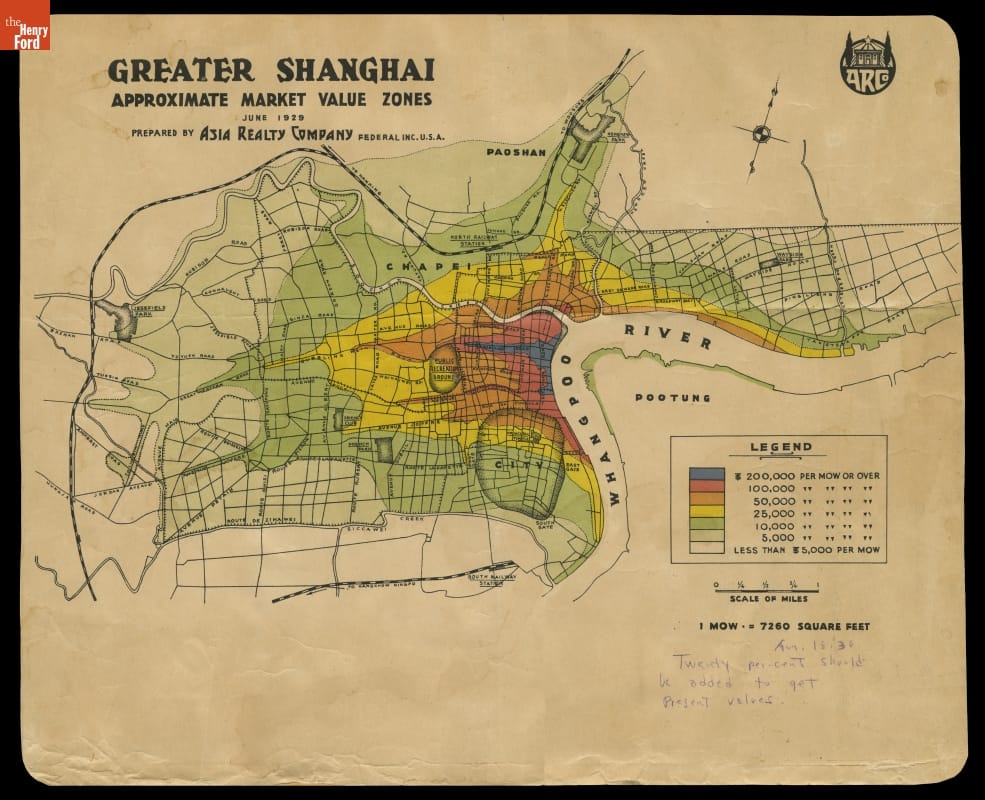
- Map, "Greater Shanghai Approximate Market Value Zones," June 1929 - Ford Motor Company operated sales and service branches in cities around the world. The company considered building an assembly plant in Shanghai, China. This map was collected during the study. Ford decided against the idea when it learned that Chinese law required the property to be owned by a citizen of China.
- June 01, 1929
- Collections - Artifact
Map, "Greater Shanghai Approximate Market Value Zones," June 1929
Ford Motor Company operated sales and service branches in cities around the world. The company considered building an assembly plant in Shanghai, China. This map was collected during the study. Ford decided against the idea when it learned that Chinese law required the property to be owned by a citizen of China.
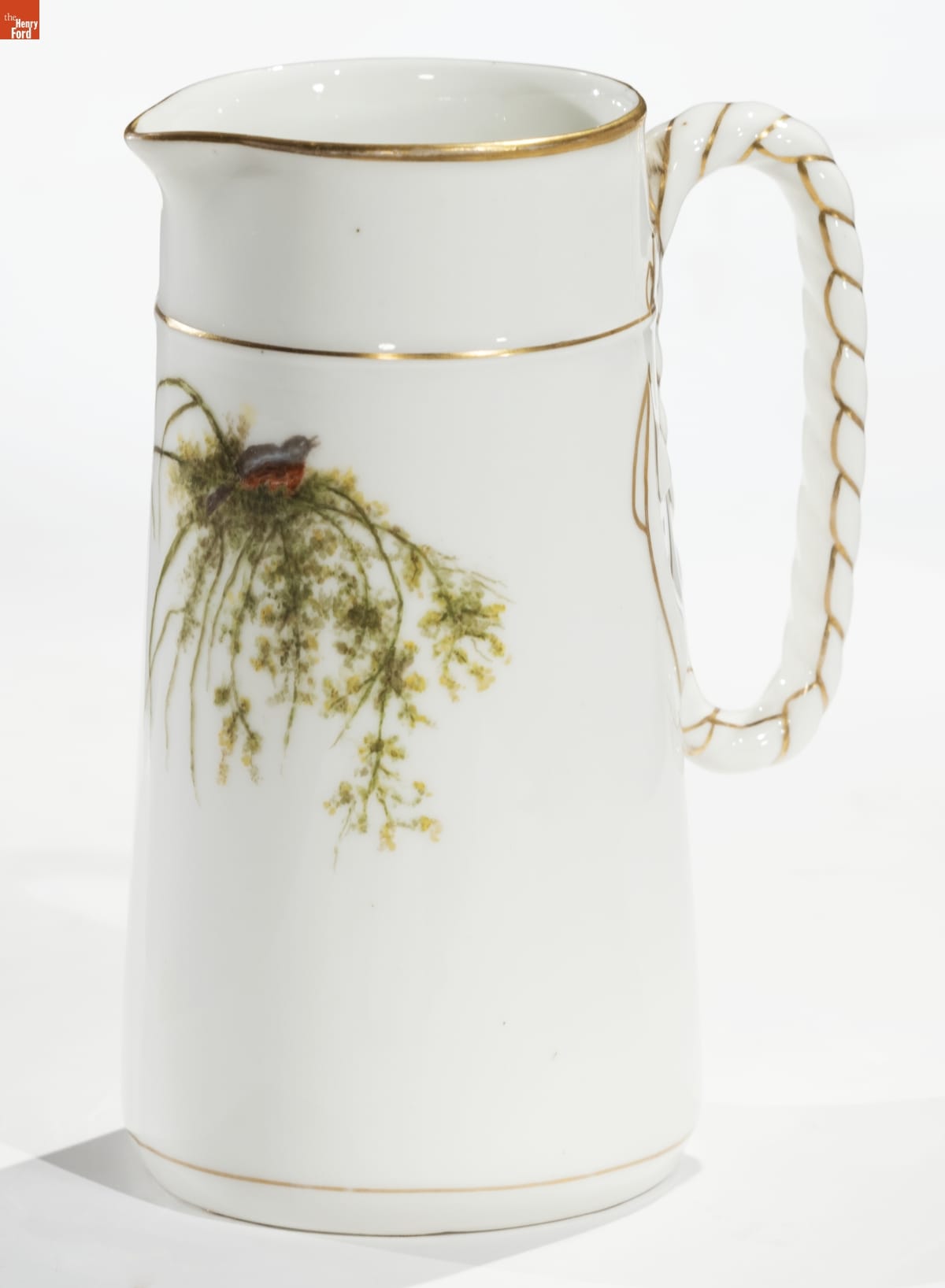
- Pitcher, 1890-1910 - China painting was an important pastime for many American women. They painted over the glaze of fired, undecorated pieces of white porcelain called "blanks." China painters learned and shared decorating techniques through manuals, classes, and regional and national associations. China painting peaked around 1900, but it remained a major feature of some women's lives through the first World War.
- 1890-1910
- Collections - Artifact
Pitcher, 1890-1910
China painting was an important pastime for many American women. They painted over the glaze of fired, undecorated pieces of white porcelain called "blanks." China painters learned and shared decorating techniques through manuals, classes, and regional and national associations. China painting peaked around 1900, but it remained a major feature of some women's lives through the first World War.
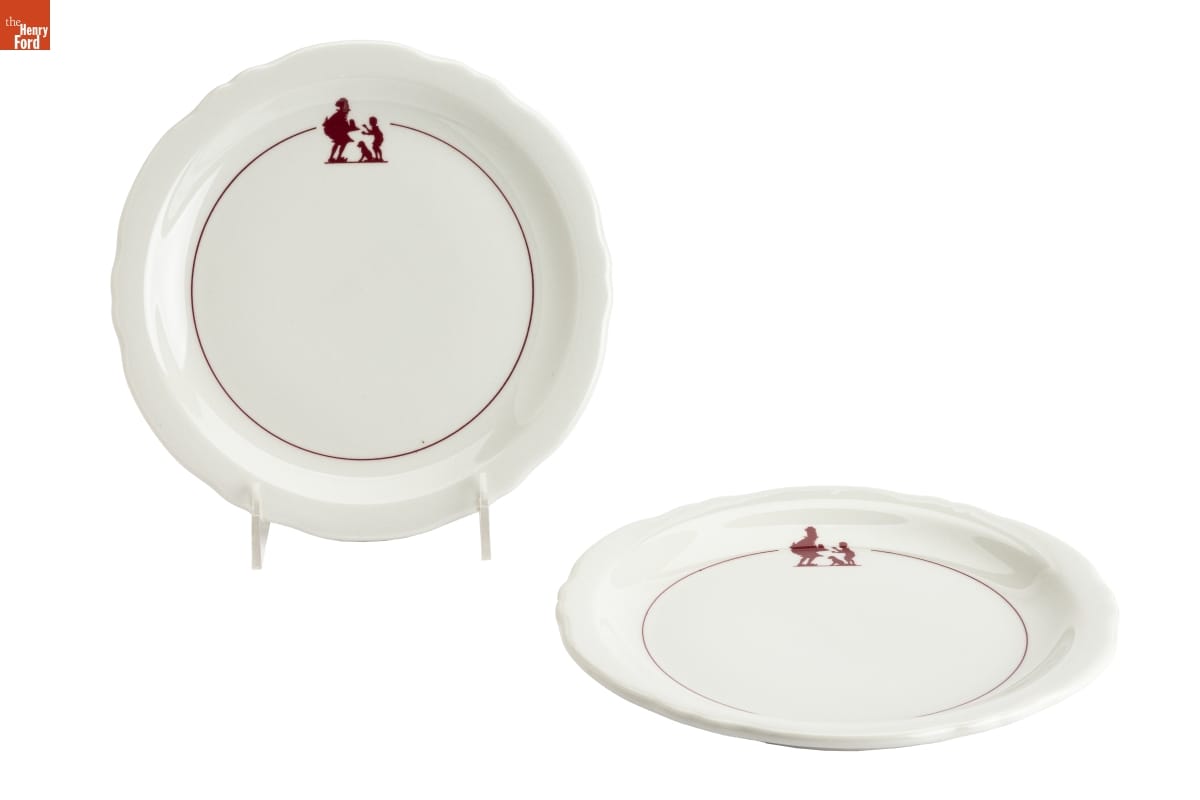
- Howard Johnson's "Simple Simon and the Pieman" Dinner Plates, 1963 - In the 1920s, Howard Deering Johnson began selling ice cream from food stands around Boston, Massachusetts. Johnson later expanded his business to full-service restaurants. He franchised these orange-roofed establishments across America -- locating them along highways to cater to the traveling public. The Simple Simon and the Pieman logo -- seen on this plate -- became a recognizable symbol to his motoring patrons.
- 1963
- Collections - Artifact
Howard Johnson's "Simple Simon and the Pieman" Dinner Plates, 1963
In the 1920s, Howard Deering Johnson began selling ice cream from food stands around Boston, Massachusetts. Johnson later expanded his business to full-service restaurants. He franchised these orange-roofed establishments across America -- locating them along highways to cater to the traveling public. The Simple Simon and the Pieman logo -- seen on this plate -- became a recognizable symbol to his motoring patrons.
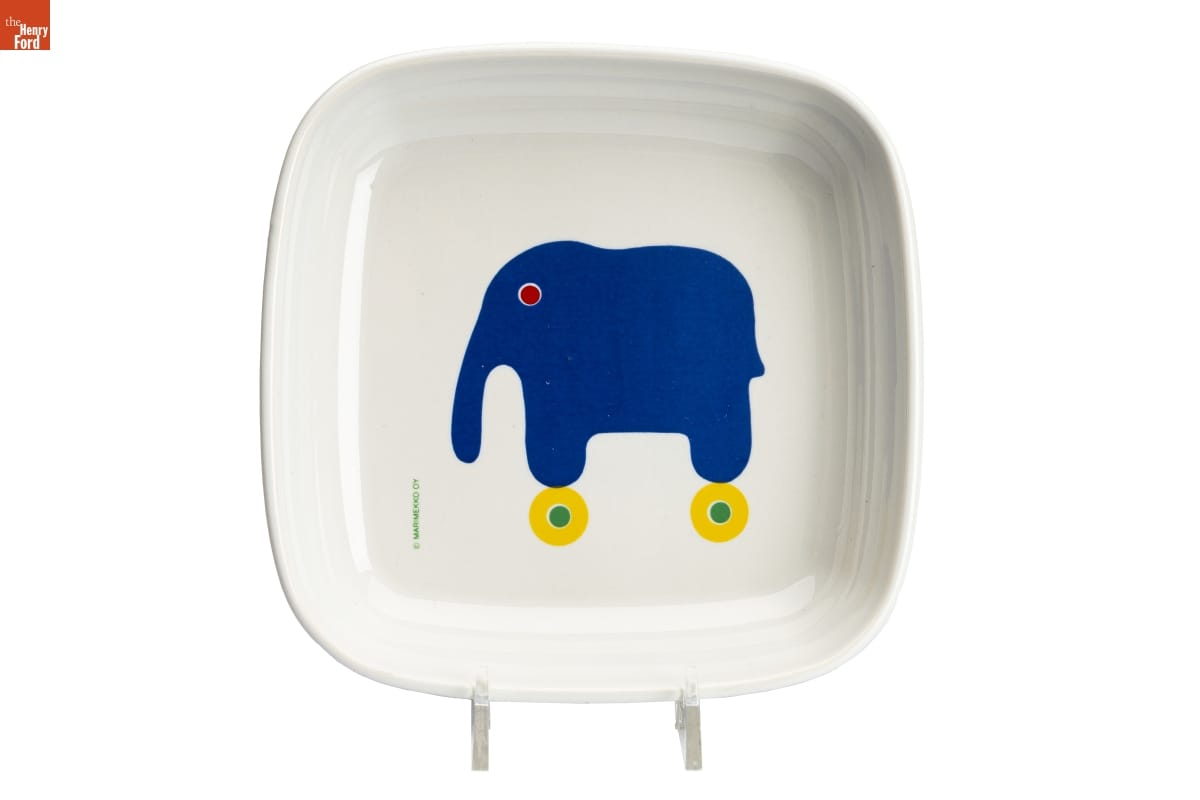
- Marimekko Elephant Plate Made for American Airlines, 1975-1980 -
- 1975-1980
- Collections - Artifact
Marimekko Elephant Plate Made for American Airlines, 1975-1980
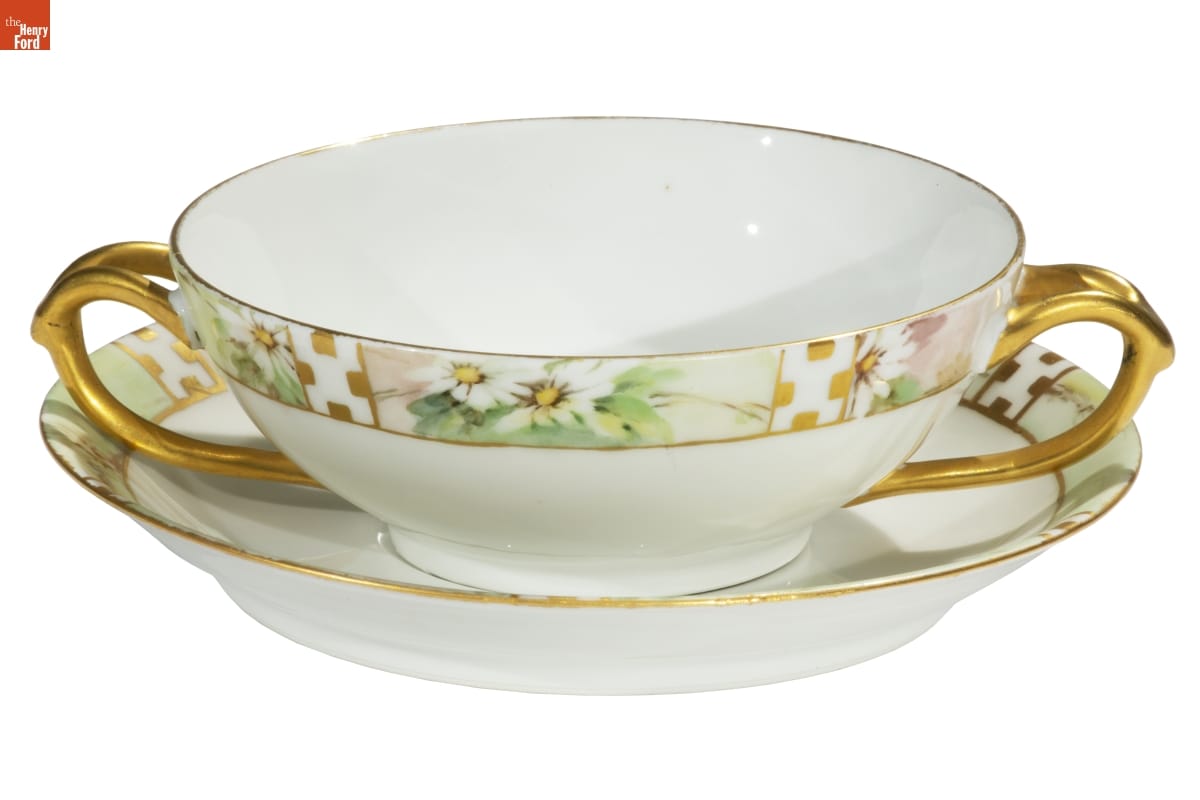
- China Soup Bowl and Saucer Set, Painted by L. Vance between 1911 and 1912 - China painting was an important pastime for many American women. They painted over the glaze of fired, undecorated pieces of white porcelain called "blanks." In preparation for her 1912 wedding to Leon Gardner, recent college graduate Helen Marie Eichele purchased and decorated a set of blank china. Friends helped paint some of the pieces, including this soup bowl and saucer set.
- 1911-1912
- Collections - Artifact
China Soup Bowl and Saucer Set, Painted by L. Vance between 1911 and 1912
China painting was an important pastime for many American women. They painted over the glaze of fired, undecorated pieces of white porcelain called "blanks." In preparation for her 1912 wedding to Leon Gardner, recent college graduate Helen Marie Eichele purchased and decorated a set of blank china. Friends helped paint some of the pieces, including this soup bowl and saucer set.
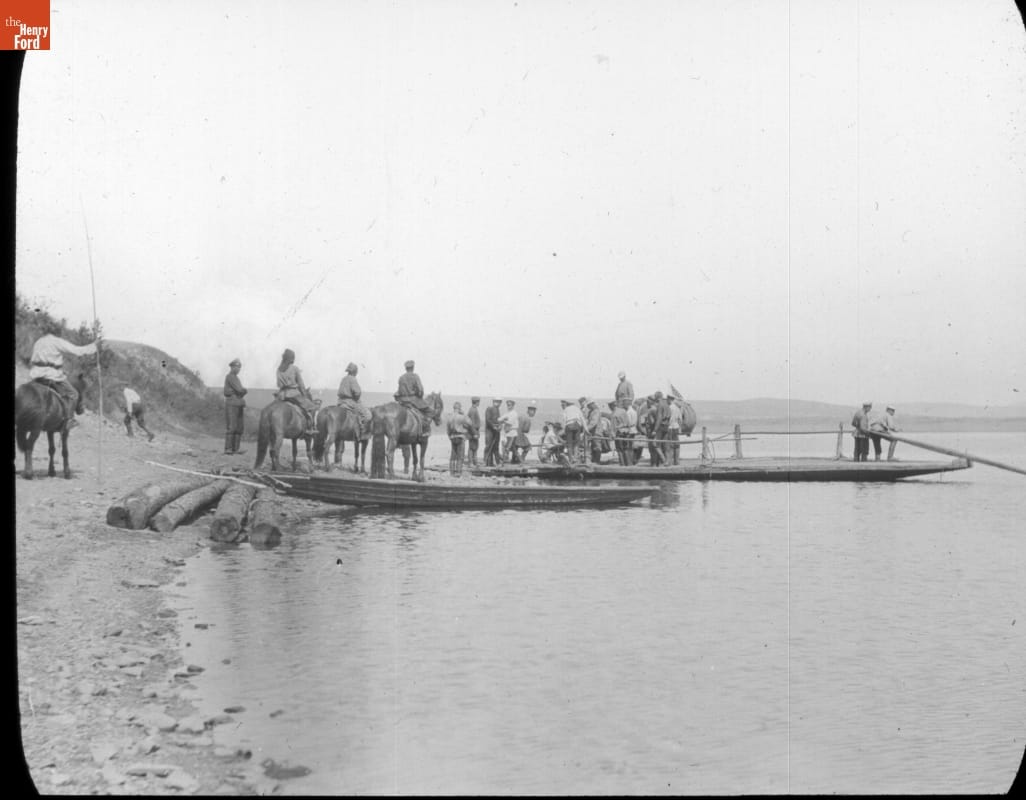
- Thomas Flyer Boarding Ferry near Stretensk, Between Manchuria and Mongolia, New York to Paris Race, 1908 - In February 1908, six automobiles began an around-the-world race from New York City to Paris, France. The contest took 169 days, covered 22,000 miles and spanned three continents. In May, the three remaining teams left Vladivostok, Russia, heading west. Each team would have to navigate around, over or through any lake, river or stream blocking their progress.
- 1908
- Collections - Artifact
Thomas Flyer Boarding Ferry near Stretensk, Between Manchuria and Mongolia, New York to Paris Race, 1908
In February 1908, six automobiles began an around-the-world race from New York City to Paris, France. The contest took 169 days, covered 22,000 miles and spanned three continents. In May, the three remaining teams left Vladivostok, Russia, heading west. Each team would have to navigate around, over or through any lake, river or stream blocking their progress.
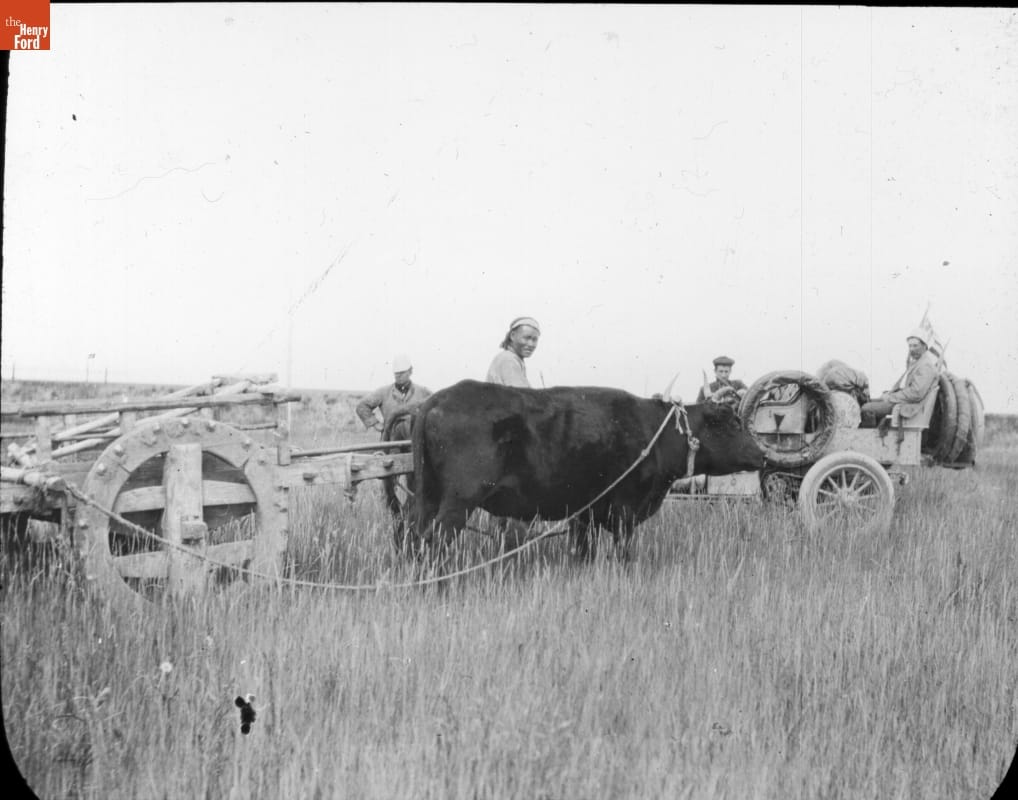
- Team of Oxen with Thomas Flyer in Manchuria, New York to Paris Race, 1908 - In February 1908, six automobiles began an around-the-world race from New York City to Paris, France. The contest took 169 days, covered 22,000 miles and spanned three continents. In May, the three remaining teams left Vladivostok, Russia. For the next two to three months the teams made their way west across the Russian countryside.
- 1908
- Collections - Artifact
Team of Oxen with Thomas Flyer in Manchuria, New York to Paris Race, 1908
In February 1908, six automobiles began an around-the-world race from New York City to Paris, France. The contest took 169 days, covered 22,000 miles and spanned three continents. In May, the three remaining teams left Vladivostok, Russia. For the next two to three months the teams made their way west across the Russian countryside.