
Search
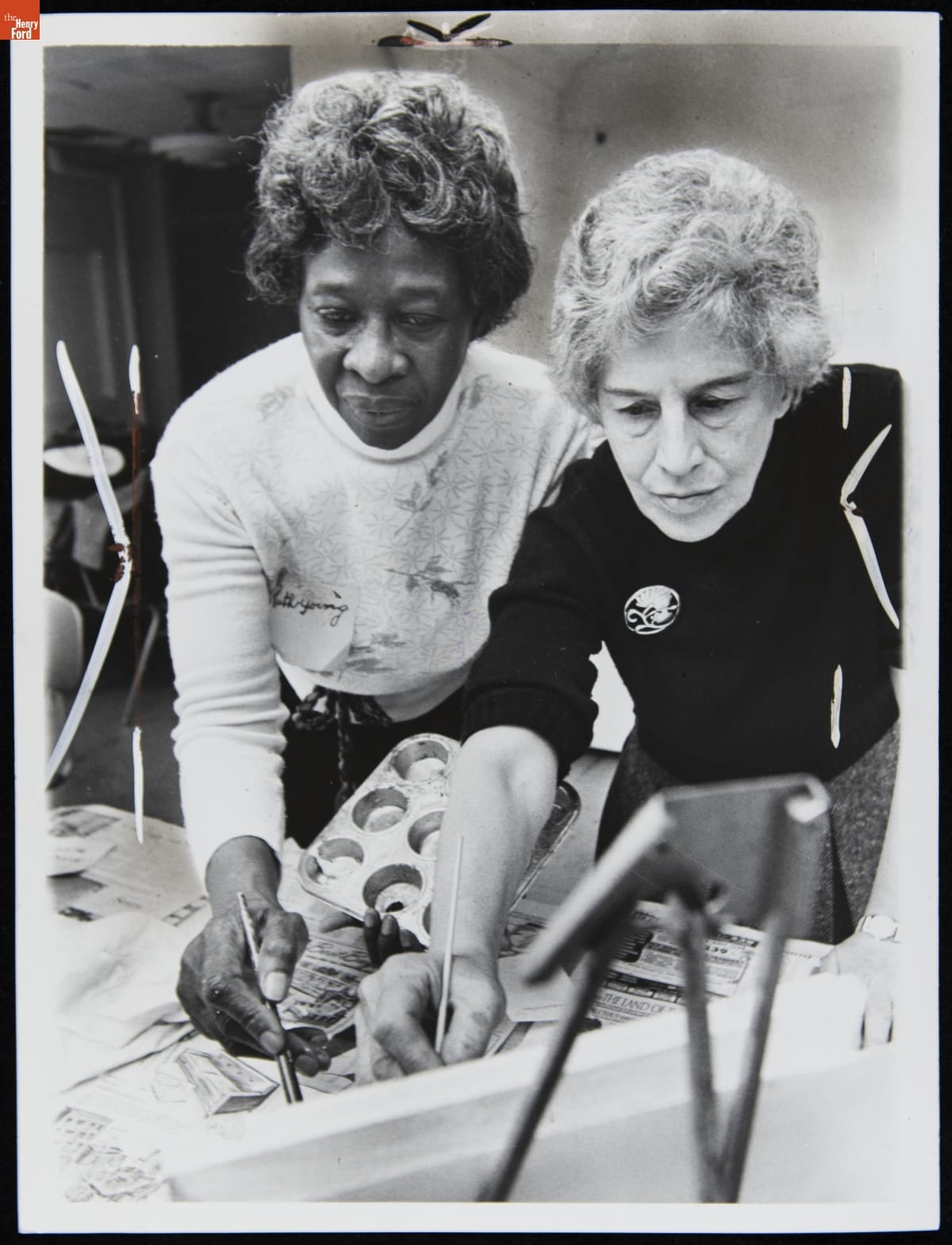
- Ruth Young and Art Teacher Josephine Barrett Mason Painting at George Washington Carver School in Detroit, March 3, 1971 -
- March 03, 1971
- Collections - Artifact
Ruth Young and Art Teacher Josephine Barrett Mason Painting at George Washington Carver School in Detroit, March 3, 1971
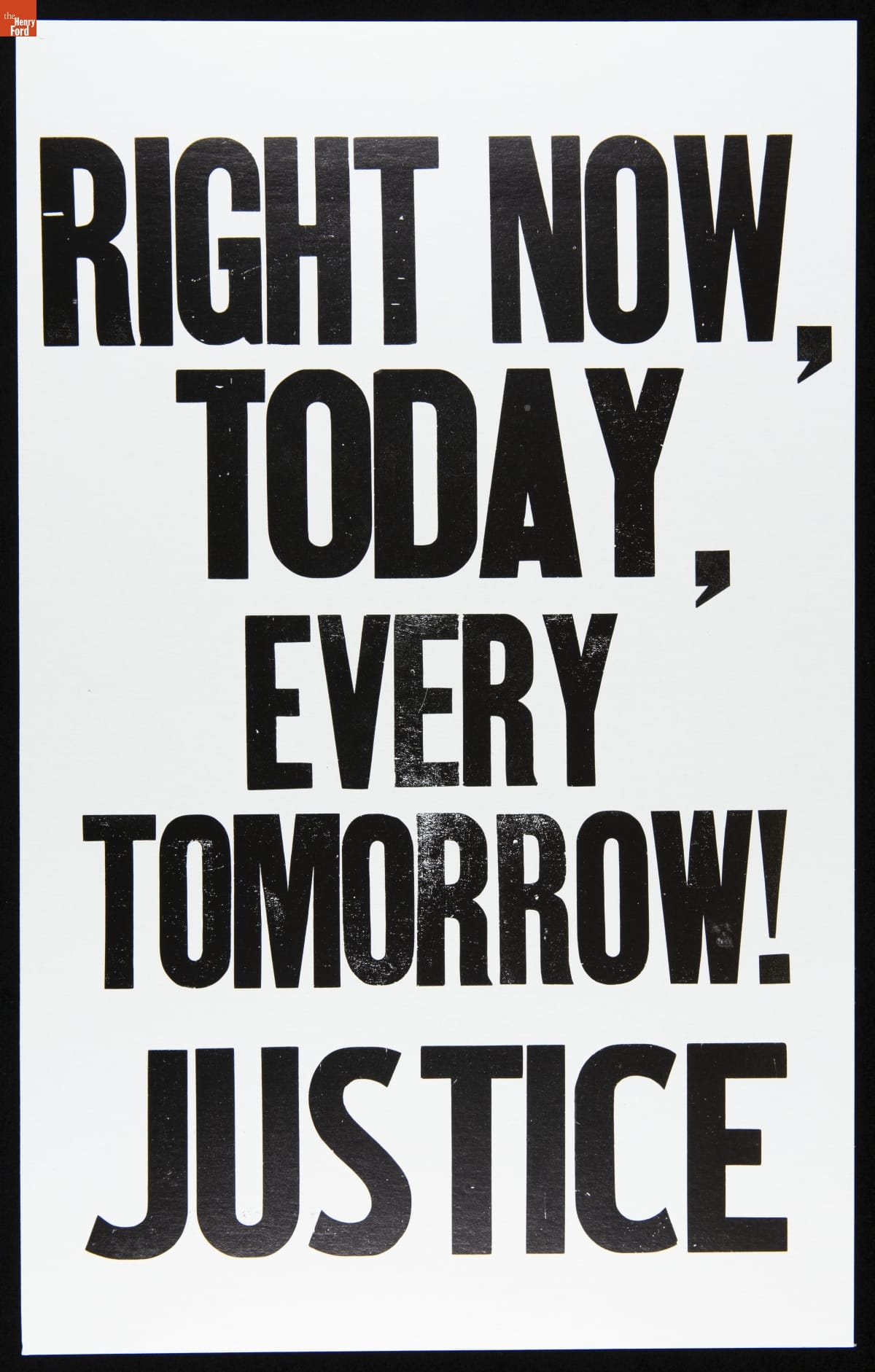
- Protest Poster, "Right Now, Today, Every Tomorrow! Justice," 2020 - In June 2020, Detroit-based non-profit letterpress organization Signal-Return responded to the civil unrest that followed the death of George Floyd by producing free protest posters for the community. These posters were made in solidarity with the principles behind the Black Lives Matter movement and distributed with the intent that they be carried in local protests or displayed in visible places.
- 2020
- Collections - Artifact
Protest Poster, "Right Now, Today, Every Tomorrow! Justice," 2020
In June 2020, Detroit-based non-profit letterpress organization Signal-Return responded to the civil unrest that followed the death of George Floyd by producing free protest posters for the community. These posters were made in solidarity with the principles behind the Black Lives Matter movement and distributed with the intent that they be carried in local protests or displayed in visible places.
- Composition Paper from a School Desk, 1940-1960 -

- 1940-1960
- Collections - Artifact
Composition Paper from a School Desk, 1940-1960
- "We Give Support to You," 1988-1999 -
- 1988-1999
- Collections - Artifact
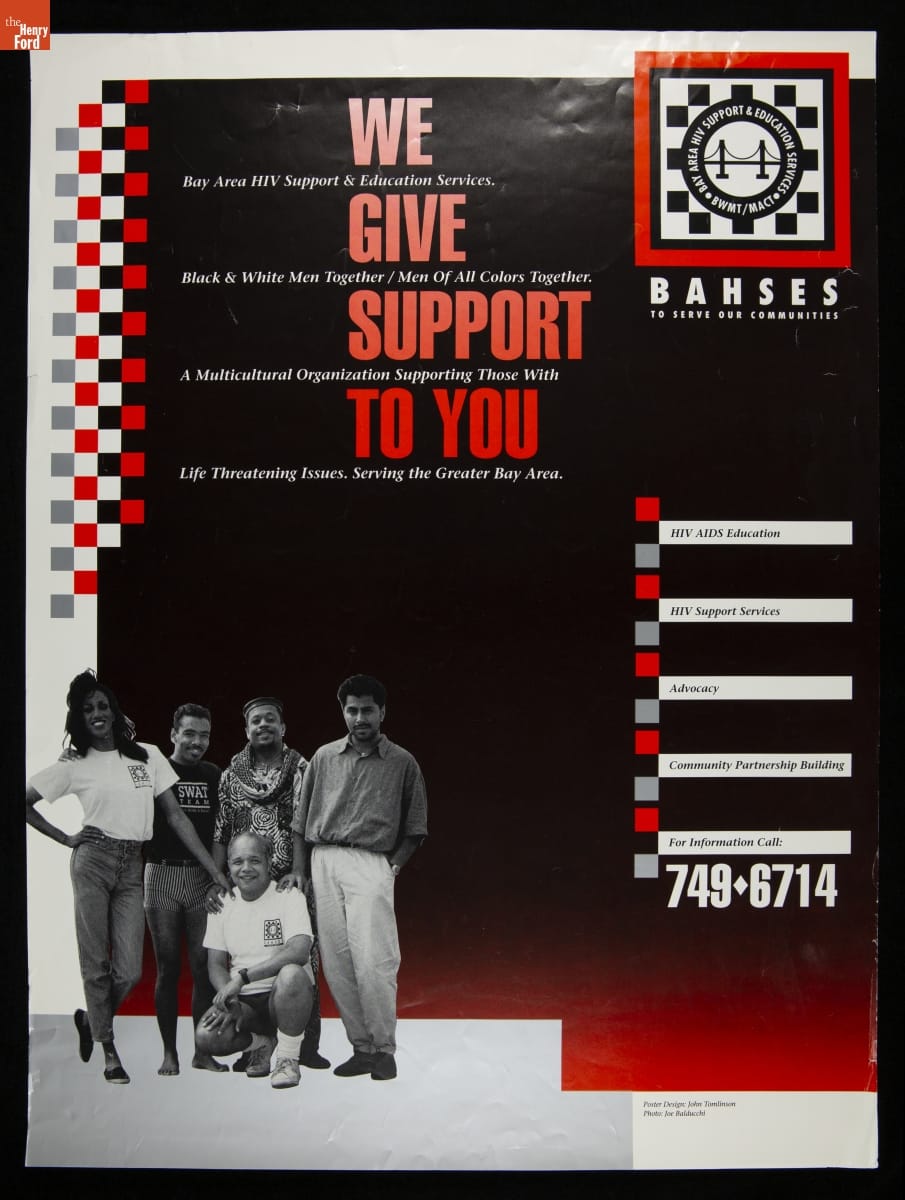
"We Give Support to You," 1988-1999
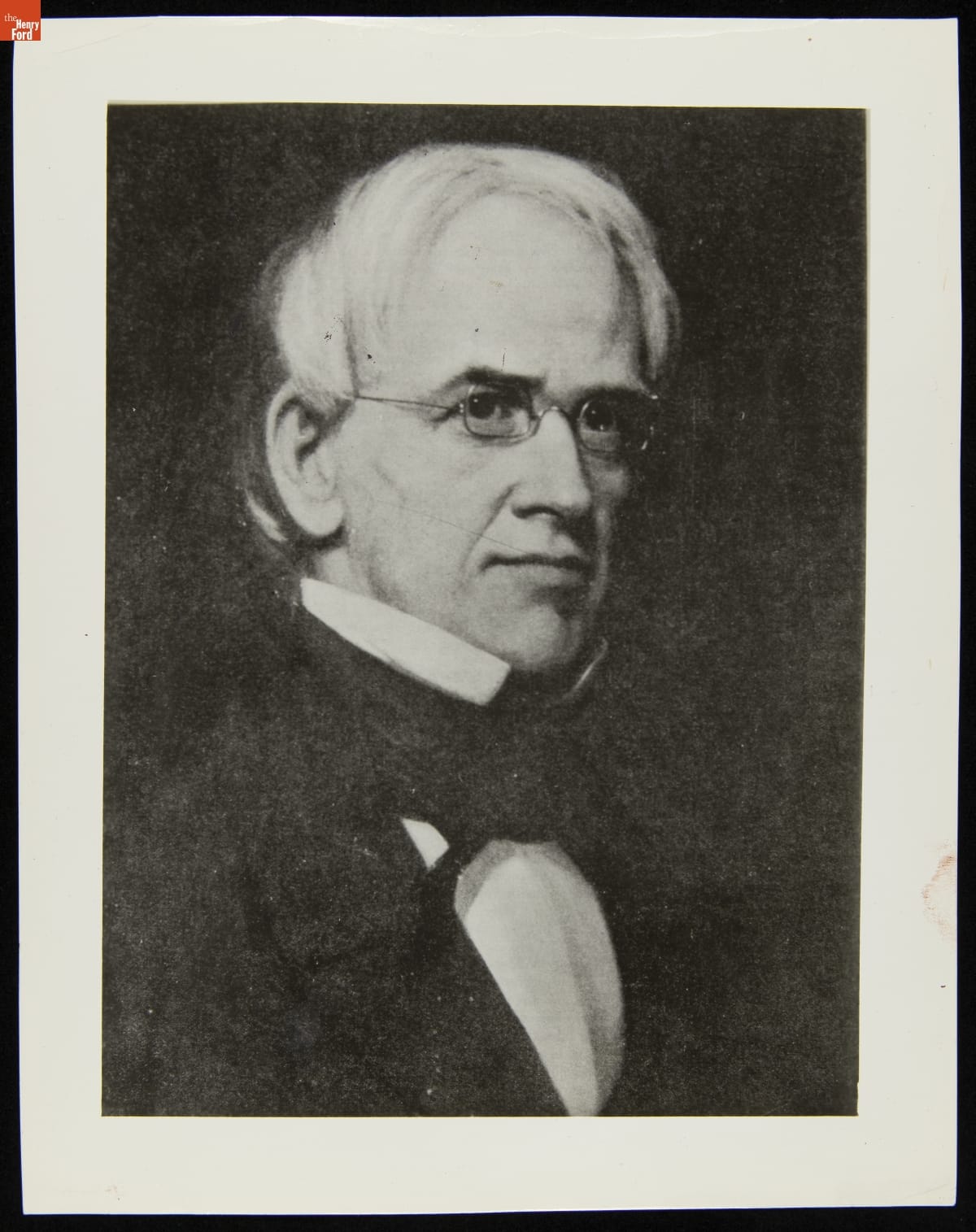
- Portrait of Horace Mann - Horace Mann (1796-1859) was an influential education reformer from Massachusetts from the 1830s to the 1850s. He advocated for free, universal public education (supported by the state) and professional teacher training. Mann believed these and other ground-breaking reforms offered all students the same body of knowledge and an equal opportunity in life, as well as instilling a greater feeling of unity among American citizens.
- December 17, 1934
- Collections - Artifact
Portrait of Horace Mann
Horace Mann (1796-1859) was an influential education reformer from Massachusetts from the 1830s to the 1850s. He advocated for free, universal public education (supported by the state) and professional teacher training. Mann believed these and other ground-breaking reforms offered all students the same body of knowledge and an equal opportunity in life, as well as instilling a greater feeling of unity among American citizens.
- Disabled Veteran Carl Bronner Displays Typing Abilities, Dearborn Independent, September 1922 -
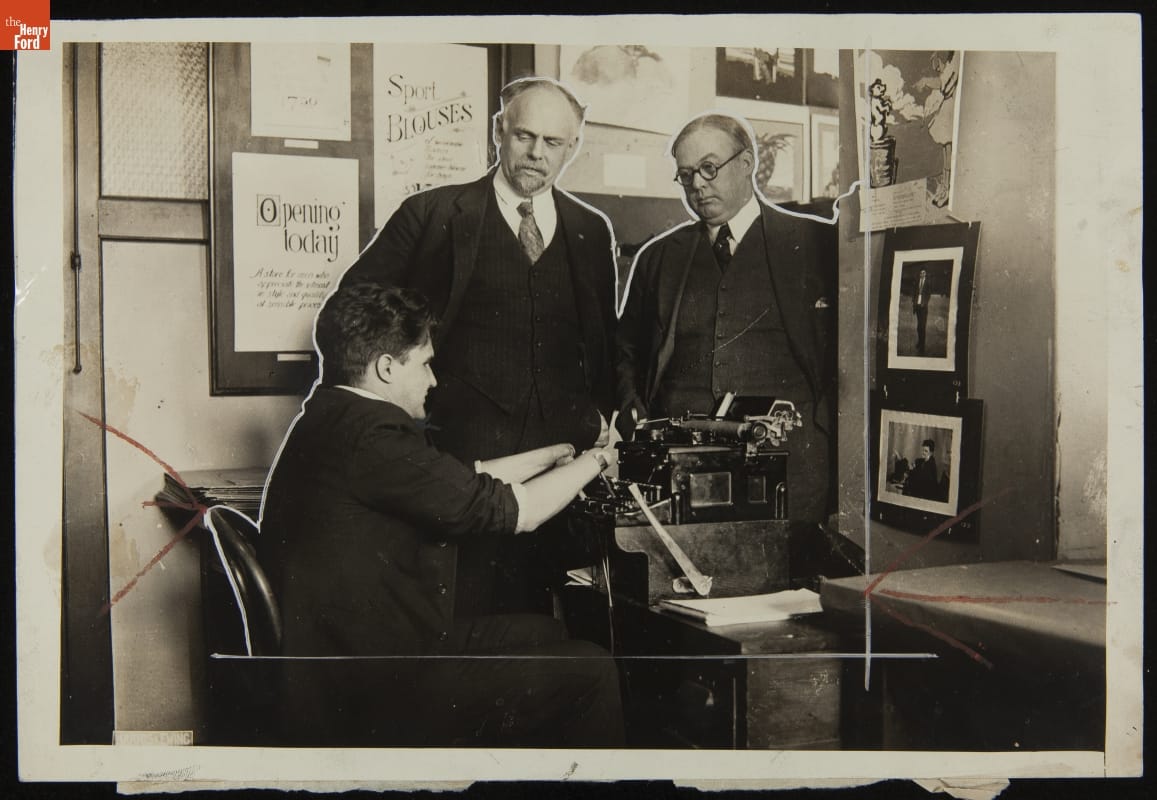
- 1921-1922
- Collections - Artifact
Disabled Veteran Carl Bronner Displays Typing Abilities, Dearborn Independent, September 1922
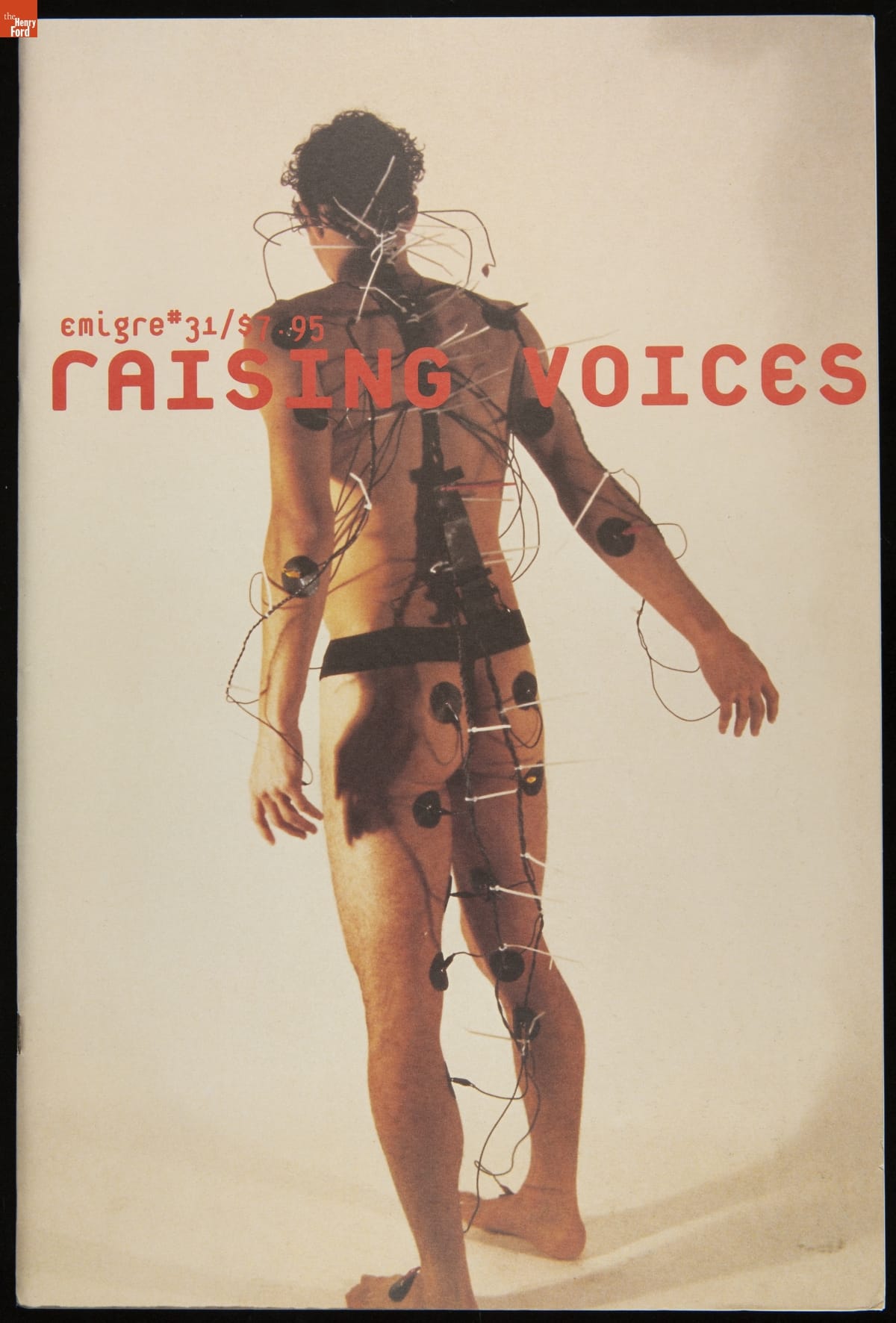
- Magazine, Emigre No. 31, "Raising Voices," 1994 - Emigre is a digital type foundry established by Rudy VanderLans and Zuzana Licko. The company's history is linked with the introduction of the 1984 Macintosh computer, used to design their early bitmapped typefaces. Emigre's digital work gained notoriety -- defying visual communication standards with fractured, layered combinations of text and image. <em>Emigre</em> magazine showcased their fonts and promoted groundbreaking designers.
- 1994
- Collections - Artifact
Magazine, Emigre No. 31, "Raising Voices," 1994
Emigre is a digital type foundry established by Rudy VanderLans and Zuzana Licko. The company's history is linked with the introduction of the 1984 Macintosh computer, used to design their early bitmapped typefaces. Emigre's digital work gained notoriety -- defying visual communication standards with fractured, layered combinations of text and image. Emigre magazine showcased their fonts and promoted groundbreaking designers.
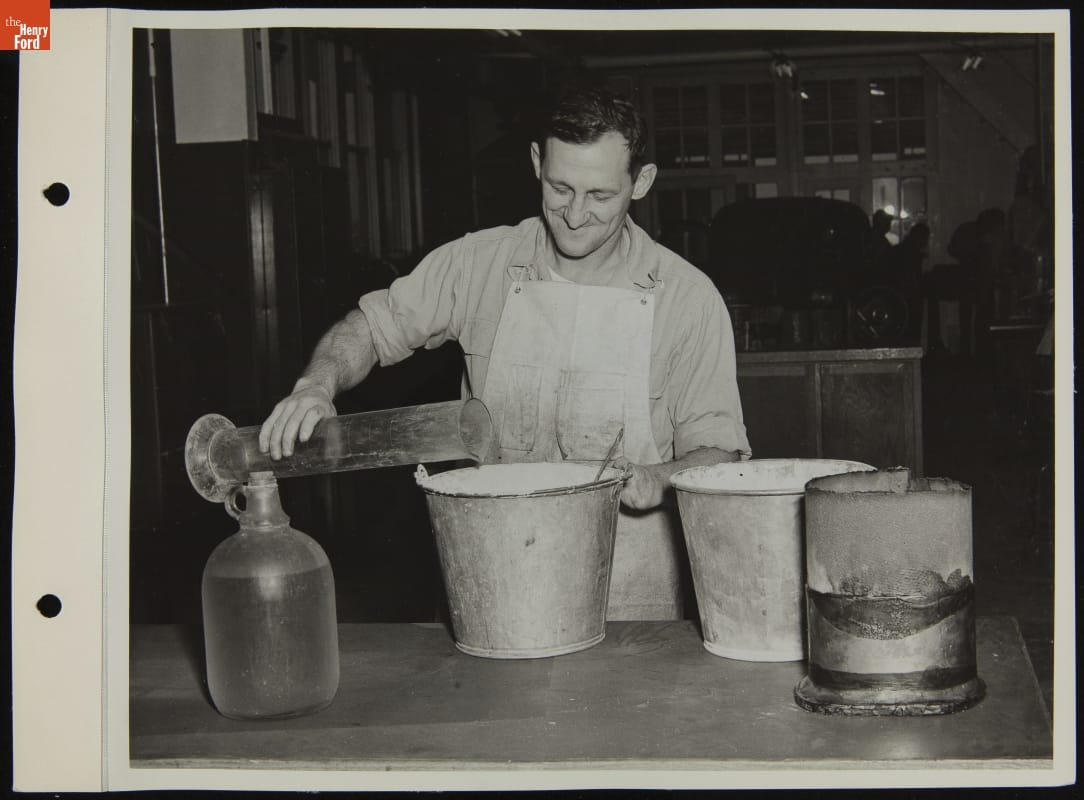
- Disabled Veteran Learning Precision Casting Work, Camp Legion Vocational School, November 1944 - Henry Ford opened Camp Legion, near Dearborn, Michigan, in 1938 for sons of dead or disabled World War I veterans. The young men earned steady wages working there seasonally from April-November. The camp's mission was modified in 1944 to include rehabilitation of World War II veterans with disabilities. Veterans learned new skills to help them reenter the workforce.
- November 28, 1944
- Collections - Artifact
Disabled Veteran Learning Precision Casting Work, Camp Legion Vocational School, November 1944
Henry Ford opened Camp Legion, near Dearborn, Michigan, in 1938 for sons of dead or disabled World War I veterans. The young men earned steady wages working there seasonally from April-November. The camp's mission was modified in 1944 to include rehabilitation of World War II veterans with disabilities. Veterans learned new skills to help them reenter the workforce.
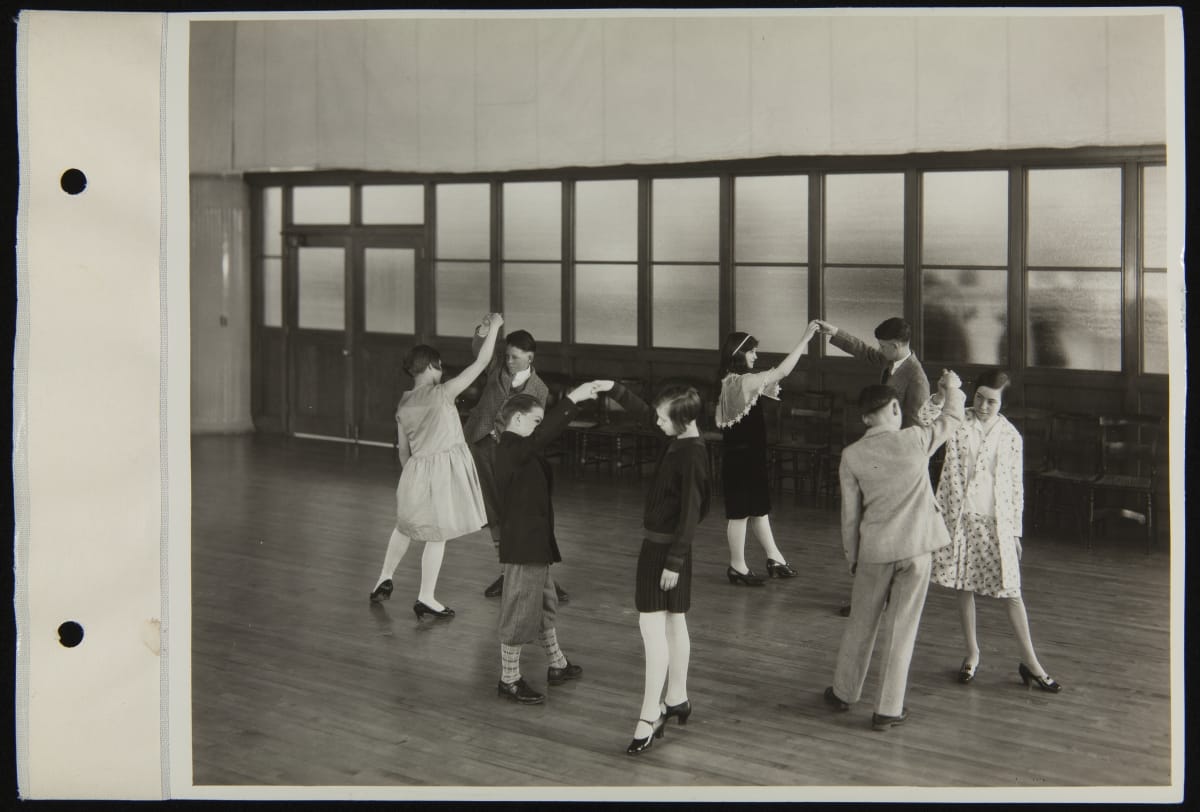
- Edison Institute School Students in the Dance Room of Ford Engineering Laboratory, May 1929 - Henry Ford created a room for dancing at Ford Motor Company's Engineering Lab, where his office and the company's engineering activities were located. These students are learning the traditional American dances of Henry Ford's youth -- along with dance etiquette. Later, Ford built Lovett Hall, an elegant ballroom named for his dancing master.
- May 11, 1929
- Collections - Artifact
Edison Institute School Students in the Dance Room of Ford Engineering Laboratory, May 1929
Henry Ford created a room for dancing at Ford Motor Company's Engineering Lab, where his office and the company's engineering activities were located. These students are learning the traditional American dances of Henry Ford's youth -- along with dance etiquette. Later, Ford built Lovett Hall, an elegant ballroom named for his dancing master.
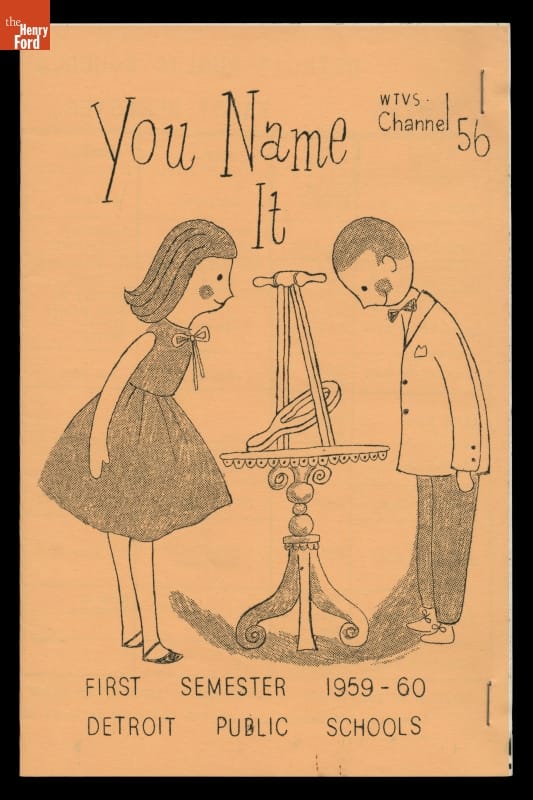
- "WTVS Channel 56 'You Name It,' 1st Semester 1959-1960, Detroit Public Schools" - Beginning in the 1950s, Henry Ford Museum and Greenfield Village partnered with WTVS, Detroit's local educational television station, to bring American history into the classroom. Marion Corwell, the museum's Manager of Educational Television, produced and hosted <em>You Name It</em> -- a half-hour quiz show. Students from grades 5 to 8 tried to identify and give the historical significance of objects from the museum's collection.
- 1959-1960
- Collections - Artifact
"WTVS Channel 56 'You Name It,' 1st Semester 1959-1960, Detroit Public Schools"
Beginning in the 1950s, Henry Ford Museum and Greenfield Village partnered with WTVS, Detroit's local educational television station, to bring American history into the classroom. Marion Corwell, the museum's Manager of Educational Television, produced and hosted You Name It -- a half-hour quiz show. Students from grades 5 to 8 tried to identify and give the historical significance of objects from the museum's collection.