
Search
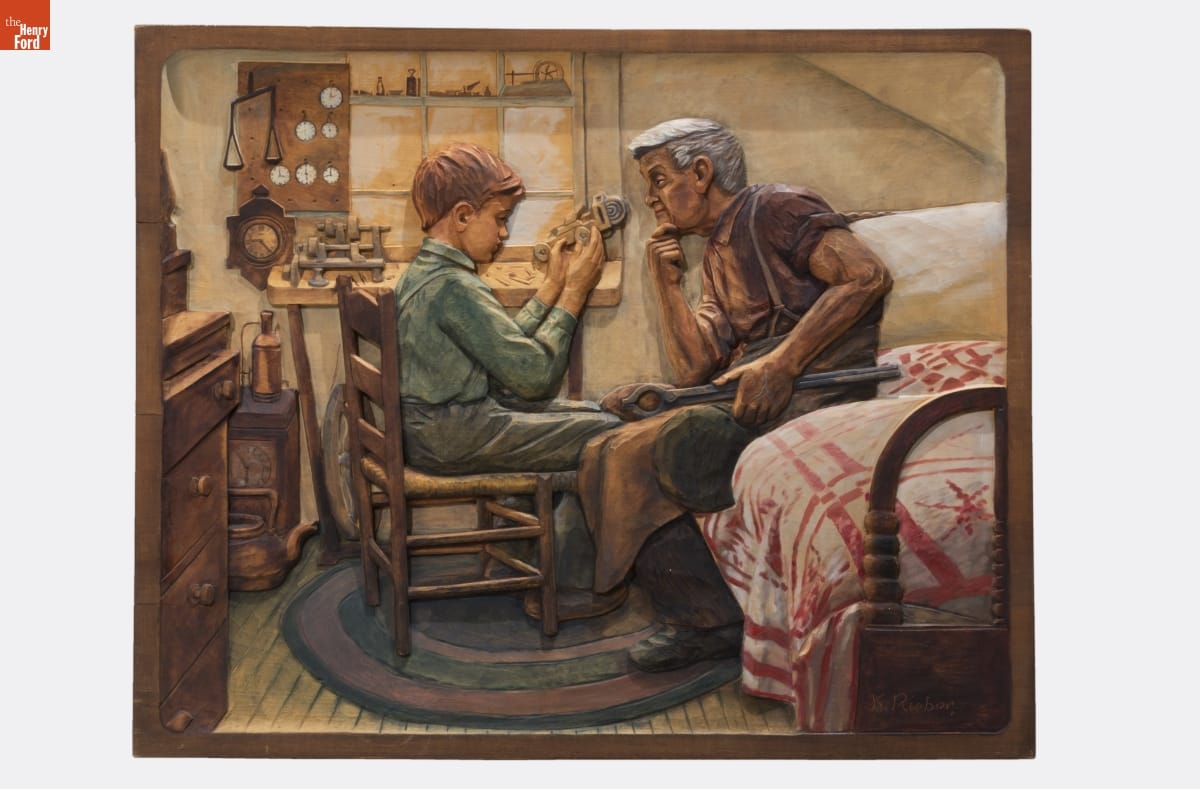
- Carving of Henry Ford, Done in Commemoration of Ford Motor Company's 50th Anniversary, 1954 -
- 1954
- Collections - Artifact
Carving of Henry Ford, Done in Commemoration of Ford Motor Company's 50th Anniversary, 1954
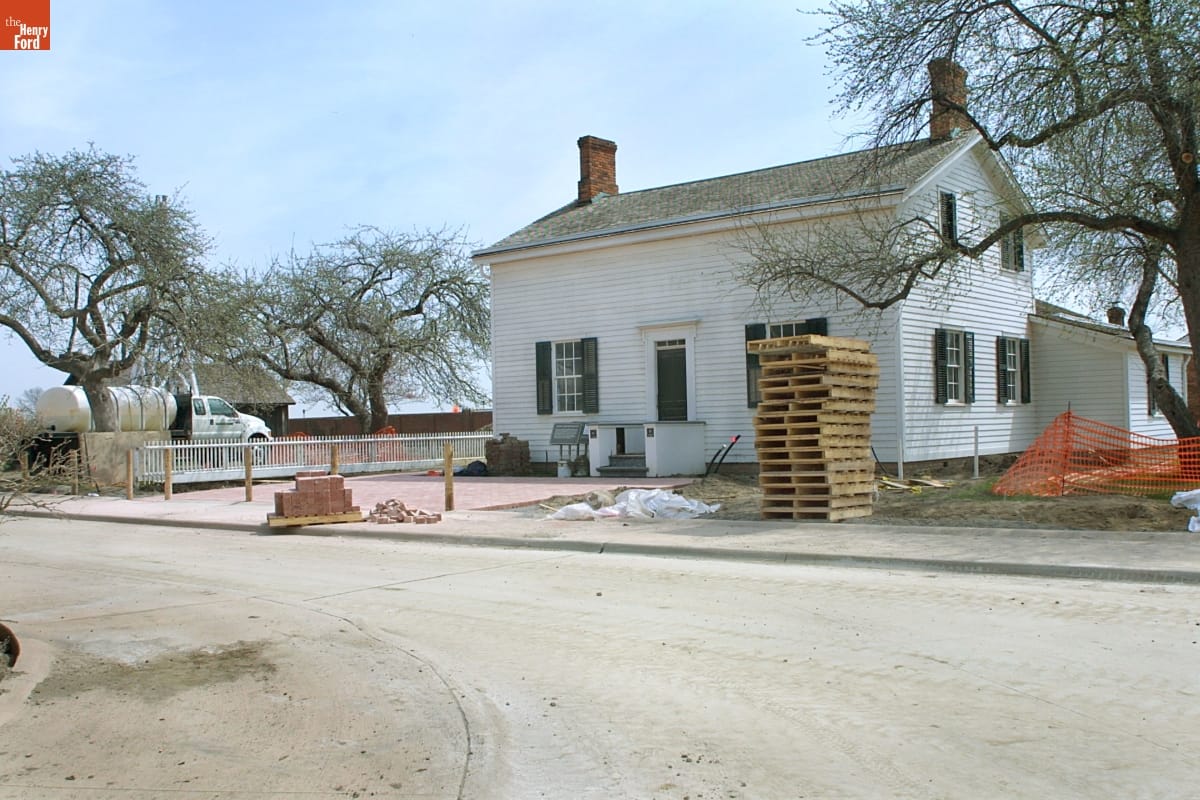
- Ford Home during Greenfield Village Restoration Project, April 2003 - By 2000, Greenfield Village began showing its age. Buildings and crumbling infrastructure desperately needed repair. Museum planners envisioned a revitalized village. They created themed "Historic Districts" by relocating and refurbishing the historic structures. Workers repaved streets and upgraded water, sewer, electric, and gas lines. In June 2003, nine months after restoration began, visitors passed through a new entrance into a reborn Greenfield Village.
- April 01, 2003
- Collections - Artifact
Ford Home during Greenfield Village Restoration Project, April 2003
By 2000, Greenfield Village began showing its age. Buildings and crumbling infrastructure desperately needed repair. Museum planners envisioned a revitalized village. They created themed "Historic Districts" by relocating and refurbishing the historic structures. Workers repaved streets and upgraded water, sewer, electric, and gas lines. In June 2003, nine months after restoration began, visitors passed through a new entrance into a reborn Greenfield Village.
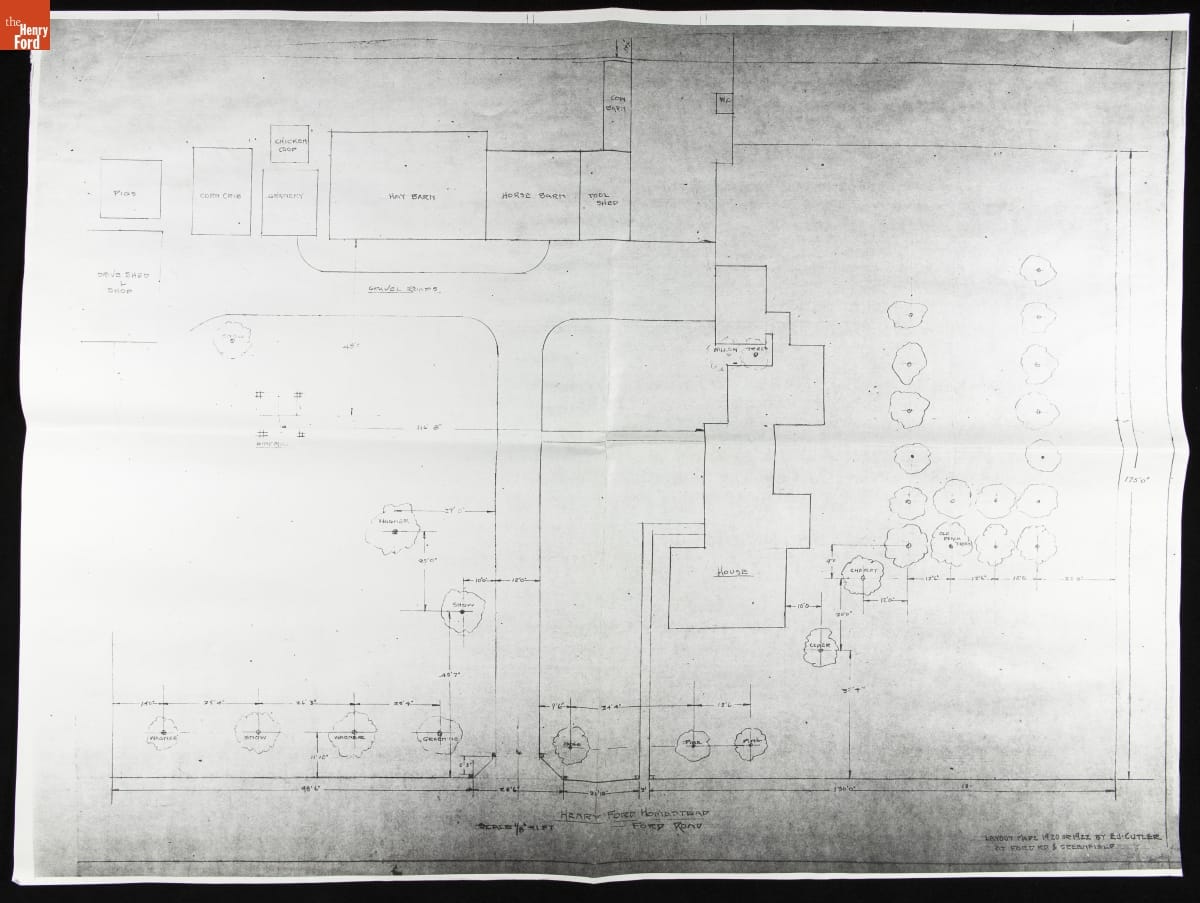
- Layout Map of Ford Road and Greenfield Road, Dearborn, Michigan, 1920-1922 -
- 1920-1922
- Collections - Artifact
Layout Map of Ford Road and Greenfield Road, Dearborn, Michigan, 1920-1922
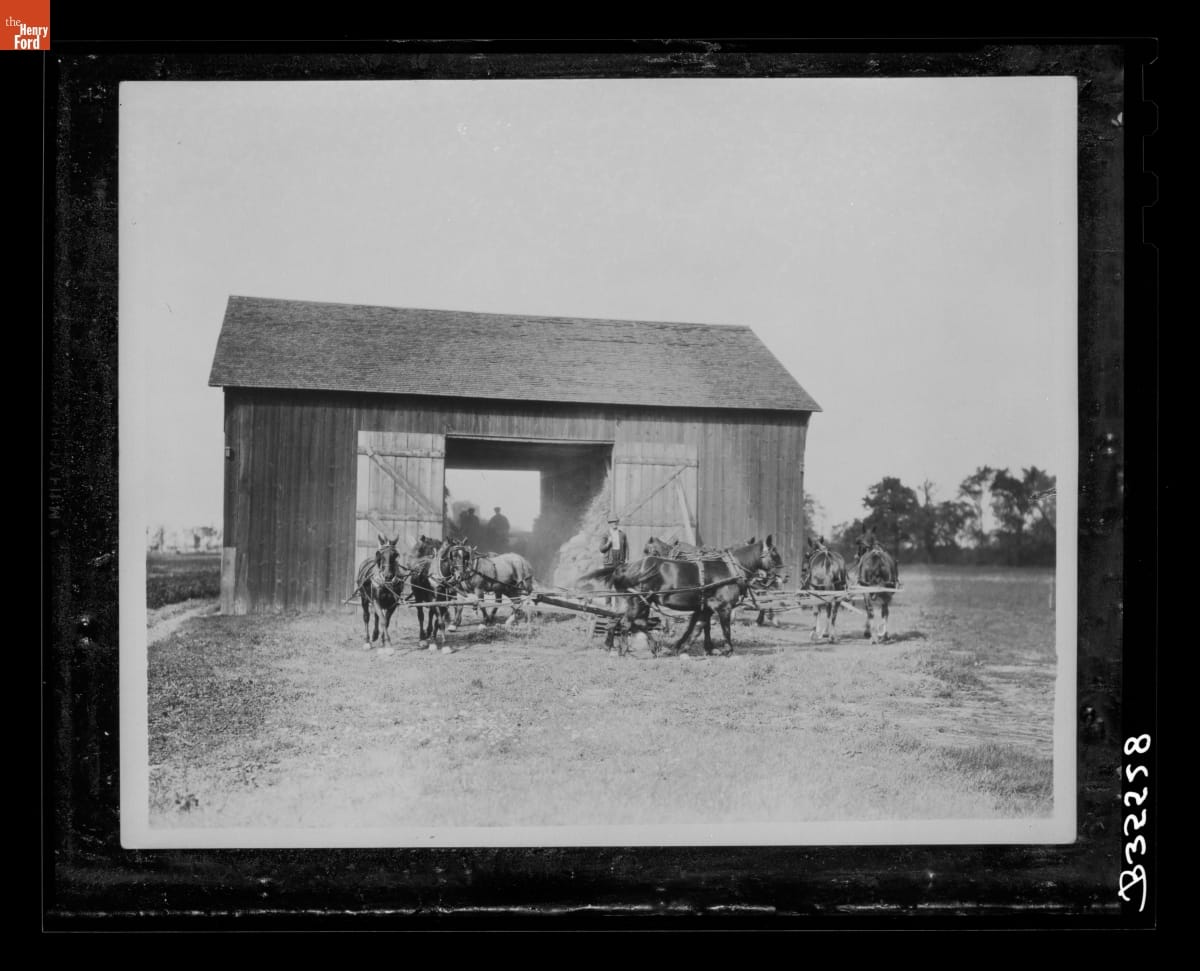
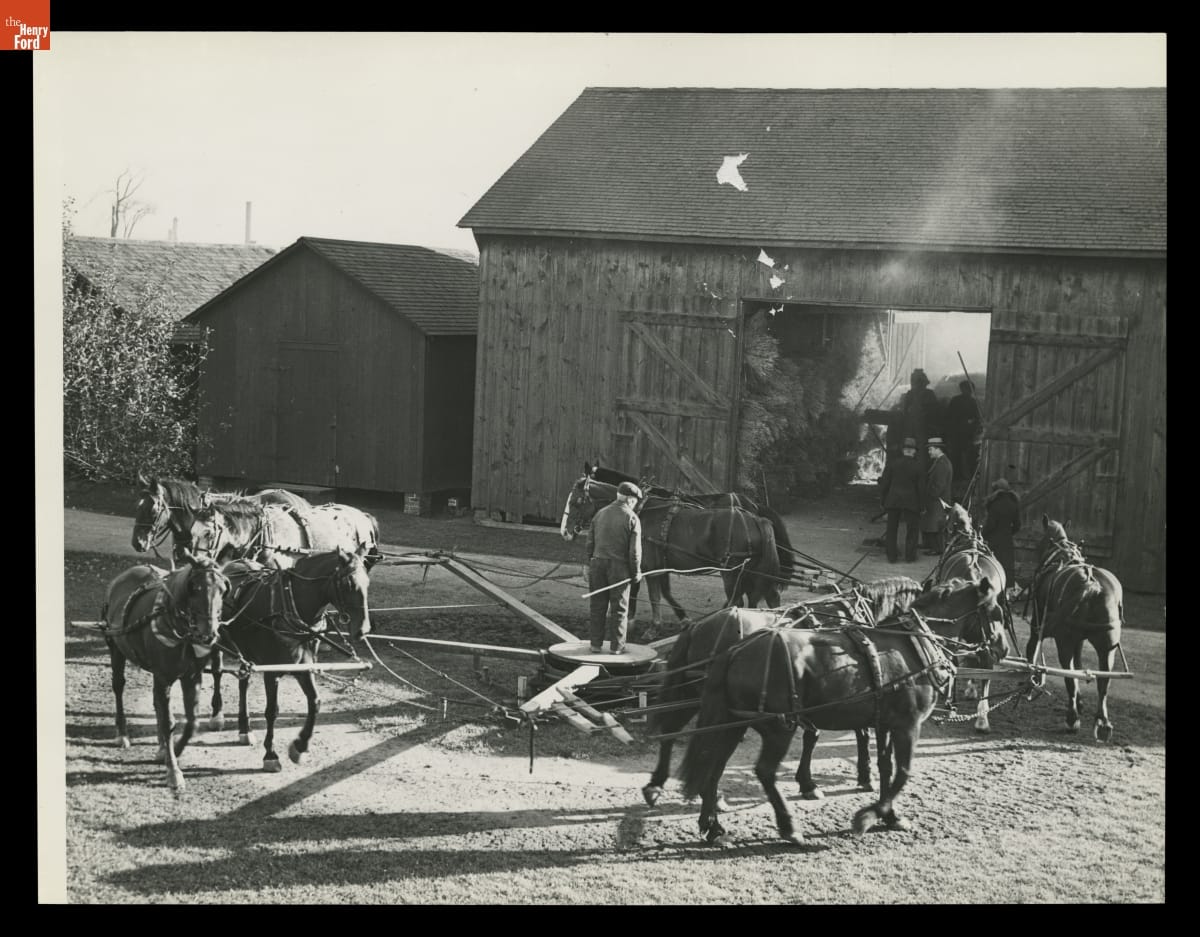
- Horse-Powered Machine Used to Run Separator at the Ford Homestead Barn, 1924 - As farmers mechanized barn and farmyard work in the nineteenth century, they began to use stationary power sources. Some invested in "sweeps," which converted energy generated by horses walking in a circle into power to operate large machines like grain threshers or separators. Sweep operators hauled these devices on specially designed wagons from farm to farm during threshing season.
- October 07, 1924
- Collections - Artifact
Horse-Powered Machine Used to Run Separator at the Ford Homestead Barn, 1924
As farmers mechanized barn and farmyard work in the nineteenth century, they began to use stationary power sources. Some invested in "sweeps," which converted energy generated by horses walking in a circle into power to operate large machines like grain threshers or separators. Sweep operators hauled these devices on specially designed wagons from farm to farm during threshing season.
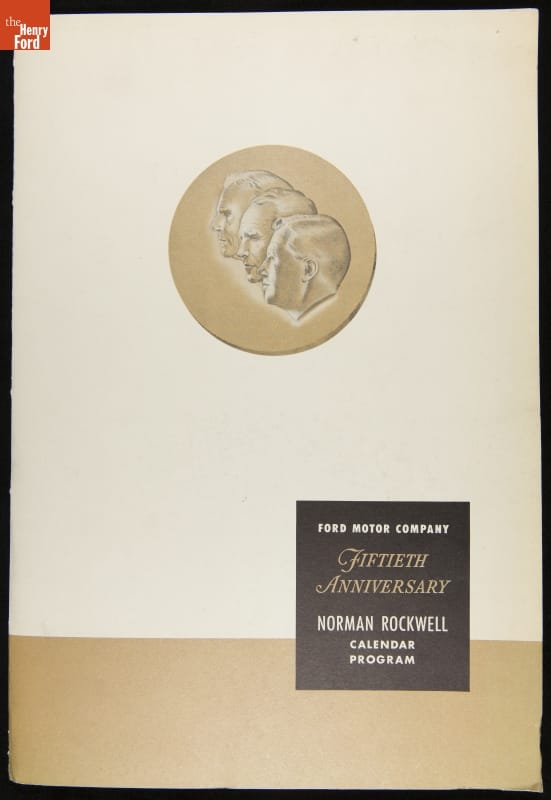
- "Ford Motor Company Fiftieth Anniversary Norman Rockwell Calendar Program," Order Kit for Ford Dealers, 1952-1953 - Henry Ford II, president of Ford Motor Company, commissioned a calendar from the celebrated American illustrator Norman Rockwell to commemorate the company's 50th anniversary in 1953. Ford urged its dealers to purchase these calendars and distribute them to their customers, other businesses, and local civic organizations. The company offered two versions: a smaller one described as a home calendar and a larger community version.
- 1953
- Collections - Artifact
"Ford Motor Company Fiftieth Anniversary Norman Rockwell Calendar Program," Order Kit for Ford Dealers, 1952-1953
Henry Ford II, president of Ford Motor Company, commissioned a calendar from the celebrated American illustrator Norman Rockwell to commemorate the company's 50th anniversary in 1953. Ford urged its dealers to purchase these calendars and distribute them to their customers, other businesses, and local civic organizations. The company offered two versions: a smaller one described as a home calendar and a larger community version.
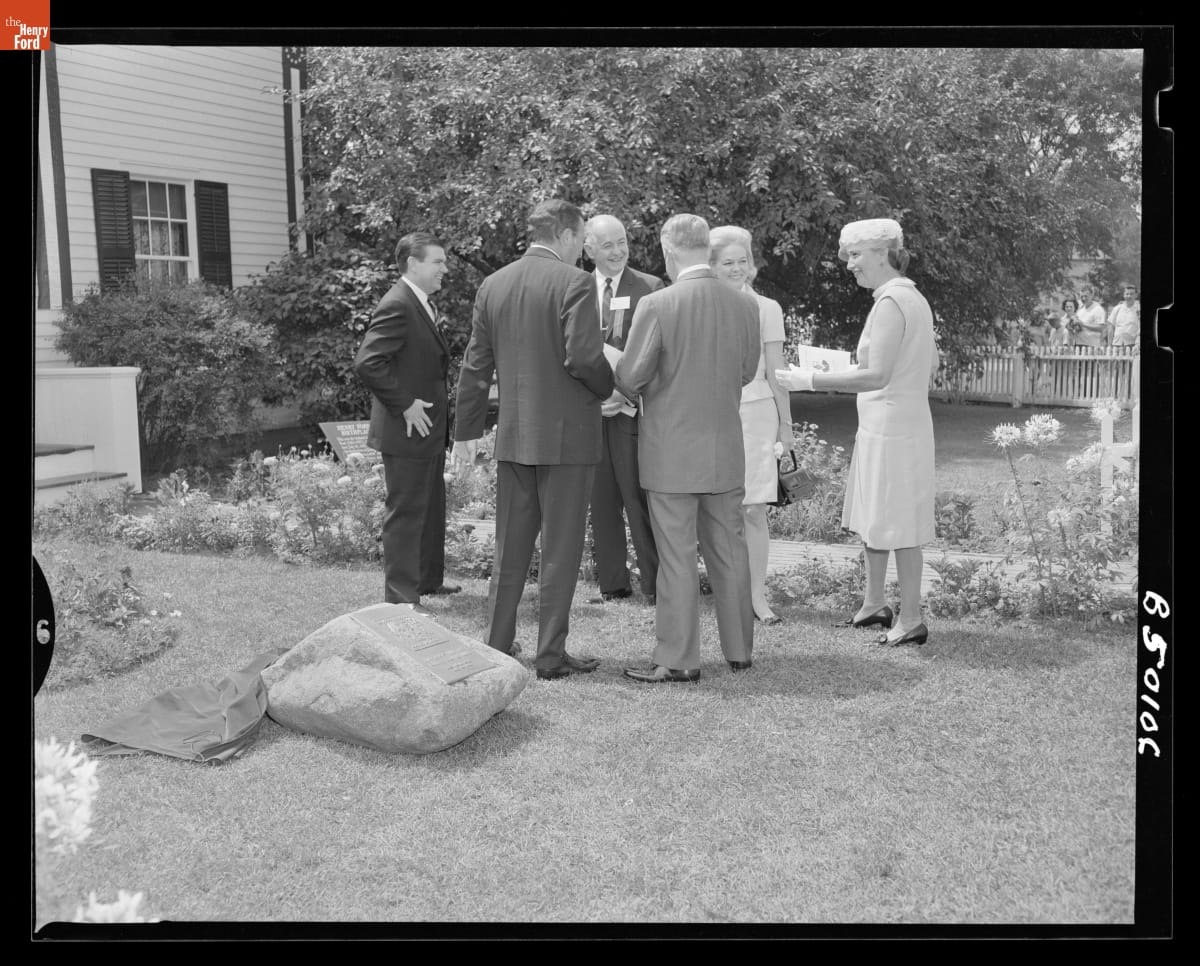
- Postmaster General W. Marvin Watson, Henry Ford II, and Others after the Henry Ford Postage Stamp Dedication in Greenfield Village, July 30, 1968 - The United States Post Office issued a commemorative postage stamp honoring Henry Ford on July 30, 1968 -- the 105th anniversary of Ford's birth. Speakers at the dedication ceremony, held in Greenfield Village, included Postmaster General Marvin Watson, U.S. Representative John Dingell, and Ford Motor Company Chairman and CEO (and Henry Ford's grandson) Henry Ford II.
- July 30, 1968
- Collections - Artifact
Postmaster General W. Marvin Watson, Henry Ford II, and Others after the Henry Ford Postage Stamp Dedication in Greenfield Village, July 30, 1968
The United States Post Office issued a commemorative postage stamp honoring Henry Ford on July 30, 1968 -- the 105th anniversary of Ford's birth. Speakers at the dedication ceremony, held in Greenfield Village, included Postmaster General Marvin Watson, U.S. Representative John Dingell, and Ford Motor Company Chairman and CEO (and Henry Ford's grandson) Henry Ford II.
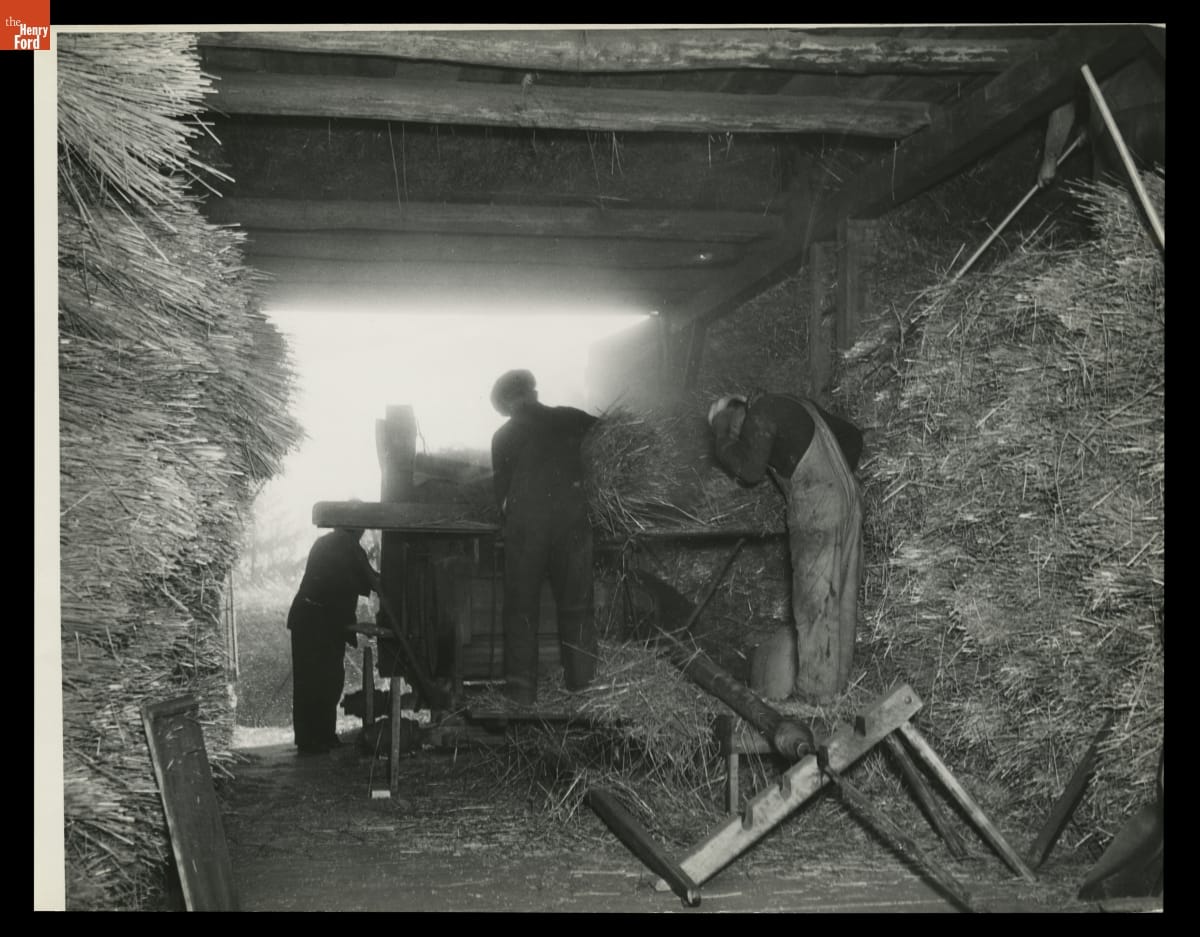
- Threshing at the Ford Homestead, Dearborn, Michigan, November 1936 -
- November 13, 1936
- Collections - Artifact
Threshing at the Ford Homestead, Dearborn, Michigan, November 1936
- Threshing at the Ford Homestead, Dearborn, Michigan, November 1936 -
- November 13, 1936
- Collections - Artifact
Threshing at the Ford Homestead, Dearborn, Michigan, November 1936
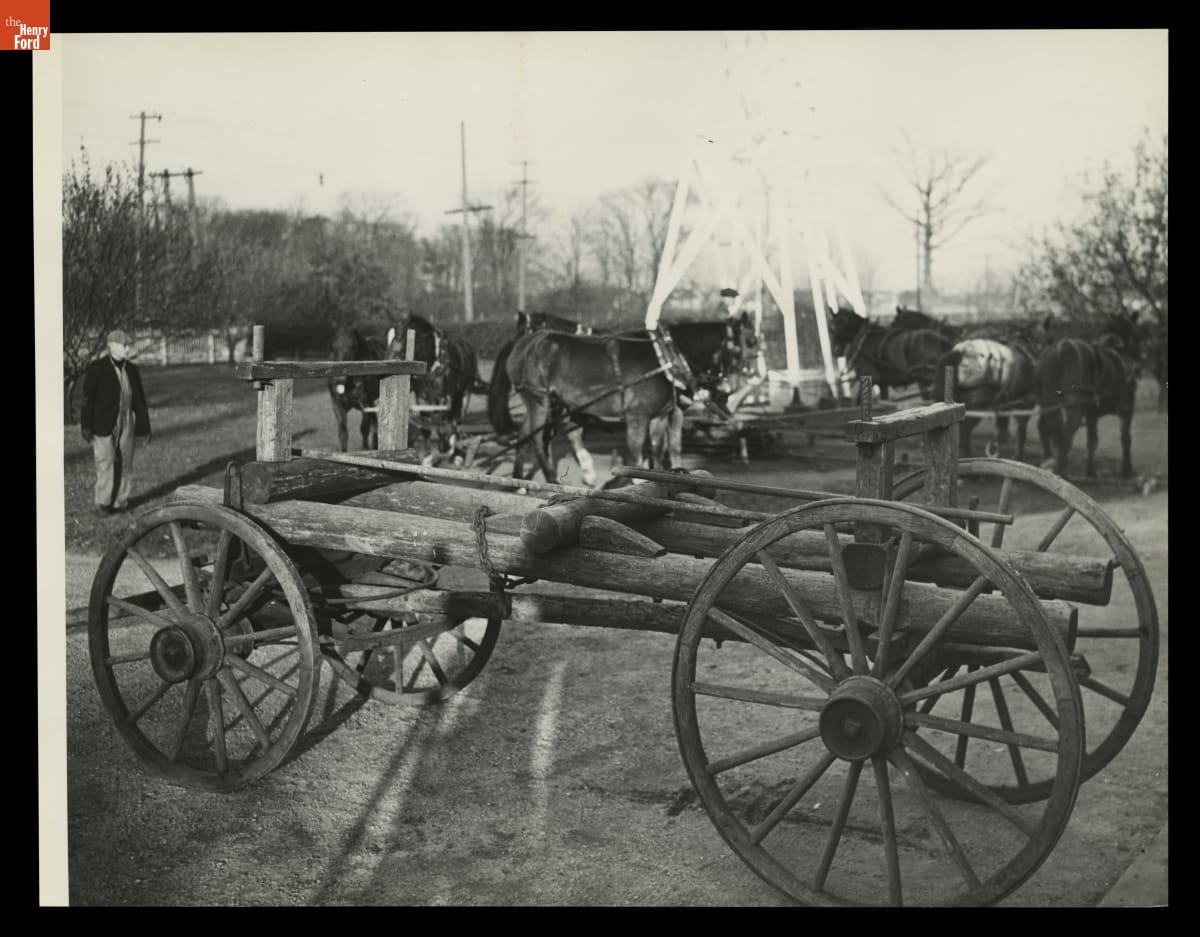
- Threshing at the Ford Homestead, Dearborn, Michigan, November 1936 - As farmers mechanized barn and farmyard work in the nineteenth century, they began to use stationary power sources. Some invested in "sweeps," which converted energy generated by horses walking in a circle into power to operate large machines like grain threshers or separators. Sweep operators hauled these devices on specially designed wagons from farm to farm during threshing season.
- November 13, 1936
- Collections - Artifact
Threshing at the Ford Homestead, Dearborn, Michigan, November 1936
As farmers mechanized barn and farmyard work in the nineteenth century, they began to use stationary power sources. Some invested in "sweeps," which converted energy generated by horses walking in a circle into power to operate large machines like grain threshers or separators. Sweep operators hauled these devices on specially designed wagons from farm to farm during threshing season.
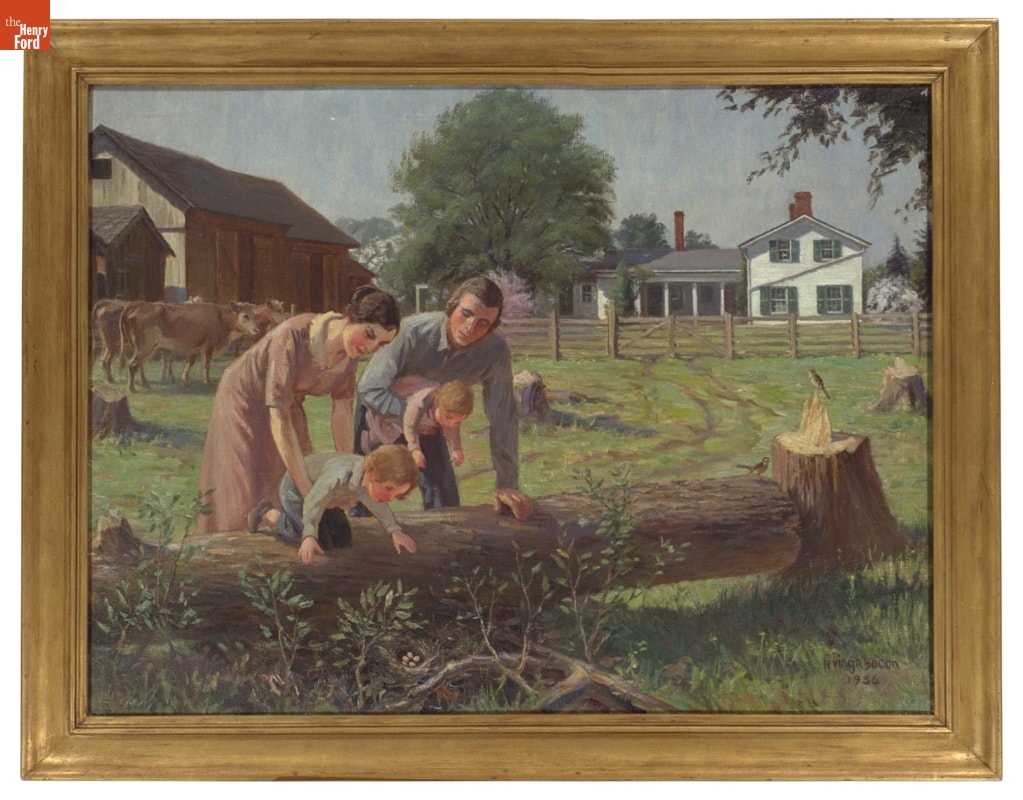
- Henry Ford as a Small Child Being Shown a Bird's Nest by his Family, by Irving Bacon, 1936 - Henry Ford, a four-year-old boy in his mother's arms, looks on as his parents show him and his brother, John, a sparrow's nest in a fallen tree. It was Ford's earliest memory, and he had the scene recreated in this painting by favorite artist Irving Bacon.
- circa 1866
- Collections - Artifact
Henry Ford as a Small Child Being Shown a Bird's Nest by his Family, by Irving Bacon, 1936
Henry Ford, a four-year-old boy in his mother's arms, looks on as his parents show him and his brother, John, a sparrow's nest in a fallen tree. It was Ford's earliest memory, and he had the scene recreated in this painting by favorite artist Irving Bacon.